RL environments for physical AI
Train AI on the realities of industrial maintenance.
Kosho builds expert-validated RL environments, demonstrations, and evaluations for diagnosing and repairing industrial equipment.
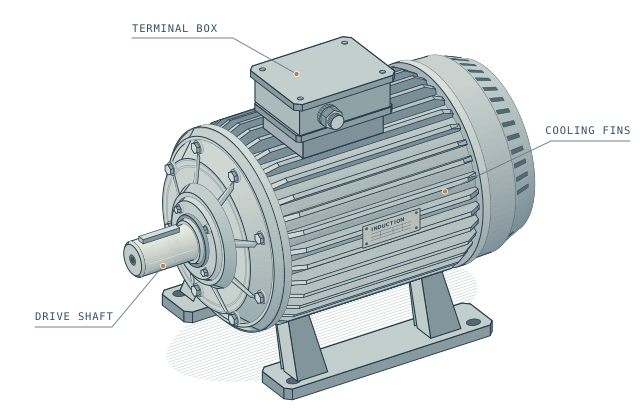
The training gap
Real-world expertise is missing from AI training.
A manual describes a machine under known conditions. Years on the floor teach a technician which observation to trust when two faults look alike. Conventional training data rarely captures those decisions.
“Bearing damage can cause vibration.”
“The vibration is strongest at the drive end. What changed under load, and what would distinguish a bearing fault from misalignment?”
Platform
Training infrastructure built around real maintenance decisions.
RL Environments
Stateful scenarios where agents inspect equipment, request evidence, and choose a repair under operating constraints.
- Observation
- Elevated vibration
- Action
- Inspect sensor history
Expert Demonstrations
Decision trajectories that capture what technicians observe, which explanations they consider, and why they change course.
- Evidence
- Drive-end impacts
- Decision
- Inspect bearing condition
Evaluations
Held-out maintenance tasks and expert-reviewed grading criteria for assessing the quality of a decision sequence.
- Criterion
- Repair justification
- Review
- Trace decision to evidence
Featured environment
Inside a Kosho maintenance environment.
Work through a motor fault with the evidence available at each step. Your inspection changes the findings that inform the repair.
Vibration at the drive end
A pump operator reports a new rough noise from a coupled induction motor. At comparable load, the drive-end sensor shows increased vibration relative to its baseline.
Operating constraint · The pump serves an active line. A planned stop is available.
- 01
Source and vet technicians
Match hands-on experience to the equipment and failure modes in scope.
- 02
Build the environment
Define the machine, hidden fault, available observations, and permitted actions.
- 03
Capture expert reasoning
Record the observations and trade-offs behind each diagnostic decision.
- 04
Validate and refine
Review physical plausibility, alternative repair paths, and the grading criteria.
Quality and evaluation
More than the right answer.
Naming a failed part tells only part of the story. The sequence of decisions reveals whether the agent used evidence, respected constraints, and chose a proportionate repair.
- Diagnostic accuracy
- Does the diagnosis account for the observed symptoms?
- Decision sequencing
- Did each inspection make sense given the evidence available then?
- Safety compliance
- Were isolation and other prerequisites respected?
- Repair effectiveness
- Does the intervention address the supported failure mechanism?
- Downtime and cost
- Was the disruption proportionate to the diagnostic value?
- Robustness
- Does the reasoning hold when a symptom or operating condition changes?
Initial domain
Starting with industrial machinery.
Electric motors connect electrical, mechanical, and operating conditions in a single machine. A change in load can mask a fault. A worn bearing can sound like a coupling problem.
Explore the motor environment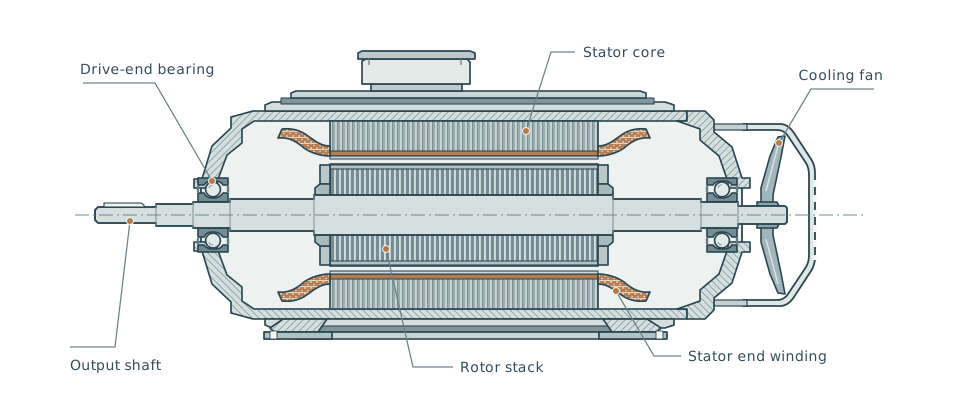
Research inquiries
Build better physical-world intelligence.
Explore expert-informed maintenance environments and evaluation data for your model-training needs.