Environments / EM–01
Inside the induction motor environment.
One machine, several plausible faults. Follow a maintenance decision from the operator’s first report through inspection, repair planning, and review.
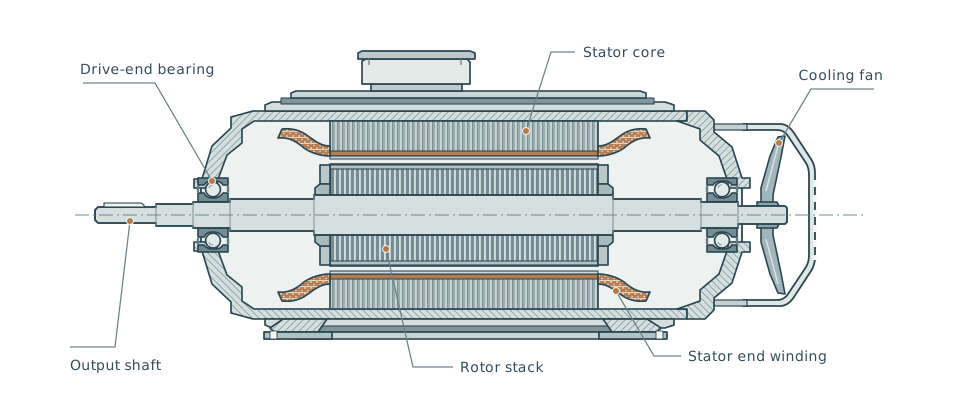
The machine
A three-phase induction motor drives a process pump through a coupling. Its bearings support the rotor shaft. A change at the bearing, coupling, or driven load can affect what the operator hears at the motor.
- Reported symptom
- Elevated vibration and abnormal noise
- Available evidence
- Sensor history and a maintenance record
- Operating constraint
- Production line active, planned stop available
Run the sample episode.
Choose a working hypothesis, inspect a record, and decide what the work order should request. Restart to compare a different path.
Vibration at the drive end
A pump operator reports a new rough noise from a coupled induction motor. At comparable load, the drive-end sensor shows increased vibration relative to its baseline.
Operating constraint · The pump serves an active line. A planned stop is available.
What the grader sees
The trace preserves the evidence available before each action. A reviewer can distinguish a reasonable provisional hypothesis from an unsupported repair and check whether the proposed follow-up could confirm the outcome.
Request a Sample- Compare drive-end vibration at a matched load.
- Inspect the envelope spectrum for localized impacts.
- Keep bearing damage provisional pending inspection.
- Plan isolation and inspection during a controlled stop.
- Check the original symptom after the approved intervention.